
As smart home technology becomes increasingly sophisticated, one of the biggest shifts in residential design is not simply what technology can do, it’s how seamlessly that technology can become part of the space.
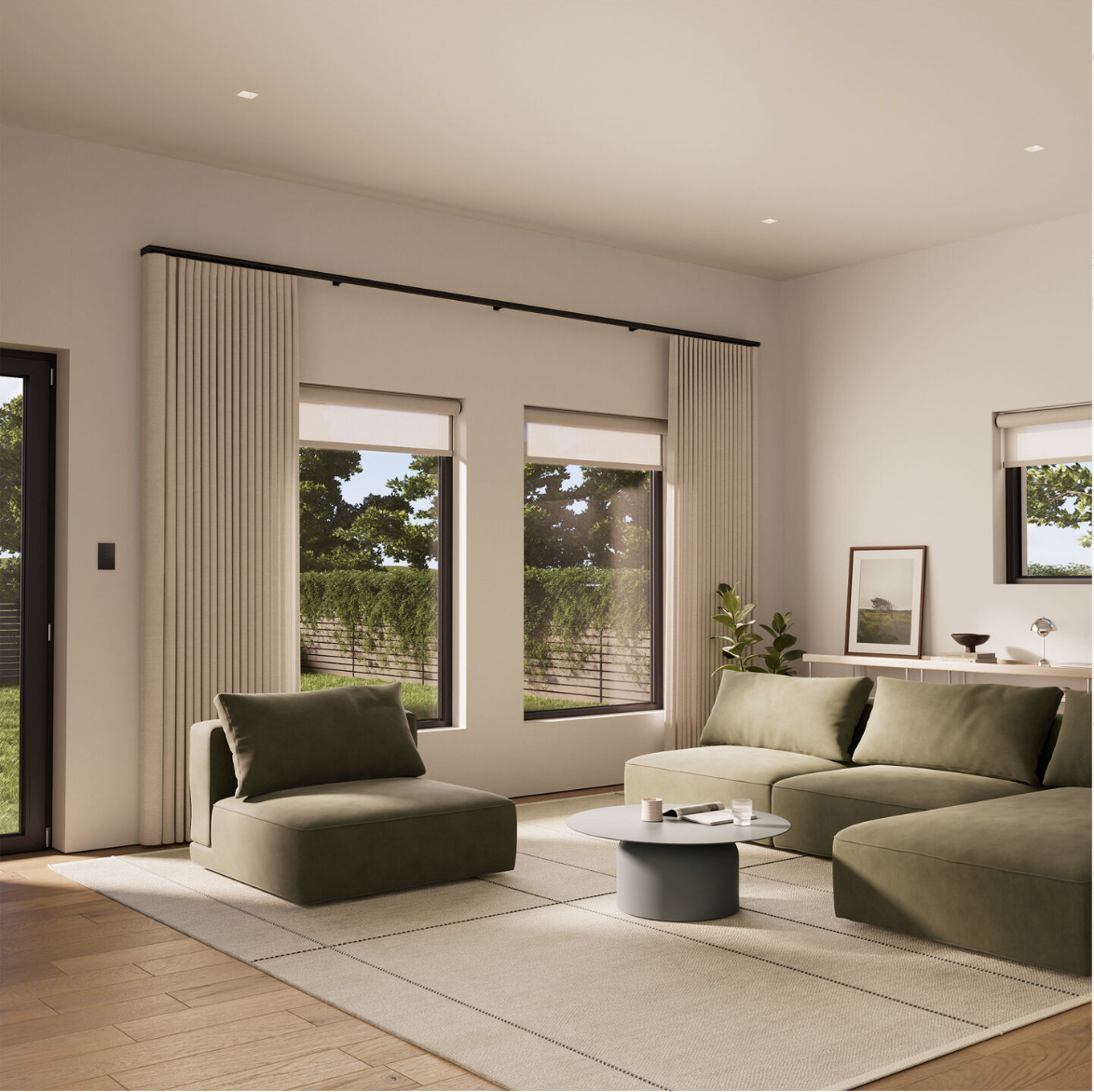
Lutron Palladiom automated drapery is a perfect example. Designed to preserve the timeless appearance of traditional drapery while introducing the convenience of automation, Palladiom gives homeowners, architects, and interior designers another way to incorporate intelligent shading without changing the character of an interior.
What Makes Palladiom Automated Drapery Different?
Motorized drapery itself isn’t new. What makes Palladiom particularly noteworthy is the attention Lutron has given to the appearance of the entire system.
Traditional automated drapery systems often require tracks, motors, wiring, and other components to be concealed within pockets, valances, or architectural details. Palladiom takes a different approach: the track and technology are designed to integrate gracefully into the room.
The system discreetly incorporates its motorization and mechanical components, creating a clean architectural appearance that allows the fabric, not the technology, to remain the focal point.
For spaces where traditional drapery is an important part of the interior design, this opens up new possibilities for automation.
The Look and Feel of Traditional Drapery with Intelligent Control
Roller shades are an excellent solution for many modern interiors, but they don't always provide the softness, texture, movement, and fullness that traditional fabric drapery brings to a room.
Palladiom allows designers and homeowners to maintain those qualities while adding the benefits of an automated system.
Drapery can open and close effortlessly without the need to manually pull fabric across the track. This can be particularly useful for large windows, floor-to-ceiling glass, difficult-to-reach areas, or rooms with multiple window treatments.
And because the technology is discreet, the finished space still feels like it was designed around the drapery, not around the automation.
More Than Motorized Drapery
One of the biggest advantages of Palladiom is that the drapery doesn't have to operate as a standalone feature.
As part of a larger Lutron lighting and shading system, automated drapery can work alongside lighting, shades, keypads, and programmed scenes to create a more cohesive experience throughout the home.
Instead of individually adjusting lights and window treatments, homeowners can create scenes for different moments of the day.
A single command could, for example, open the drapery and adjust the lighting in the morning. An evening scene could close the drapery, dim the lights, and prepare the room for entertaining. Drapery can also be incorporated into schedules so the home responds automatically as the day progresses.
The goal is less interaction with individual pieces of technology and a home that simply responds the way you want it to.
Designed With Architects and Interior Designers in Mind
For architects and interior designers, automated window treatments have traditionally introduced another layer of coordination. Where will the motor go? How will the track be concealed? Where does power need to be located? Will the technology interfere with the intended aesthetic?
Palladiom addresses many of these concerns by treating the hardware itself as an architectural element.
Rather than assuming every component needs to disappear behind construction, its streamlined track is designed to have a deliberate, finished appearance. That provides greater flexibility when incorporating automated drapery into spaces where traditional window treatments are central to the design.
Early coordination with the AV, lighting, electrical, architectural, and interior design teams can take this even further, allowing power, control, drapery, lighting, and other smart-home systems to be planned together rather than addressed individually later in the project.
Comfort, Privacy and Natural Light at the Touch of a Button
Automated drapery isn't only about convenience. It also makes it easier to manage how a home interacts with natural light throughout the day.
Depending on how the system is designed and programmed, homeowners can quickly adjust their window treatments for privacy, glare reduction, daylight management, comfort, entertaining, or simply a change in atmosphere.
This becomes especially valuable in residences with expansive glazing, where manually opening and closing several large drapery panels every day can quickly become impractical.
Automation turns something homeowners might otherwise leave in one position into an element of the home they can actually use throughout the day.
Part of a Complete Smart Home Experience
Palladiom becomes even more powerful when considered as part of the home's overall technology strategy.
Lighting, shading, drapery, audiovisual systems, climate, and other smart-home features can be coordinated so homeowners aren't managing a collection of unrelated devices.
For example, a “Movie” scene could close the drapery, lower additional shades, dim the lights, and prepare the AV system for viewing. An “Away” scene could adjust lighting and window treatments throughout the residence with a single command.
This is where thoughtful residential technology integration can make a meaningful difference: sophisticated systems become simpler to use because much of the complexity is happening behind the scenes.
Where Does Palladiom Automated Drapery Make Sense?
Palladiom is particularly well suited to high-end residential environments where both technology and interior aesthetics are priorities. It can be an excellent consideration for primary suites, living rooms, dining rooms, home theaters, entertaining spaces, floor-to-ceiling windows, and other areas where traditional fabric drapery contributes significantly to the finished interior.
It can also complement other Lutron shading solutions throughout the same residence. A project doesn't necessarily have to choose between roller shades and drapery, the appropriate solution can be selected room by room while maintaining a cohesive control experience.
Technology That Supports the Interior
Some of the best residential technology is technology you barely notice.
Lutron Palladiom Automated Drapery demonstrates how automation can enhance a traditional design element rather than replace it. Homeowners retain the warmth, movement, and elegance of beautifully tailored drapery while gaining the convenience and control expected from a modern smart home.
For architects and interior designers, it provides another option for integrating technology while keeping the original design vision at the forefront. For homeowners, it means an elegant window treatment becomes easier and more enjoyable to use every day.
Beautiful interiors. Intelligent control. Technology that works quietly behind the scenes.
CK Technology Group works with homeowners, architects, interior designers, and residential project teams to design and integrate Lutron lighting, automated shading and drapery, AV, and smart-home control systems. Contact our team to discuss how Palladiom Automated Drapery can be incorporated into your next project.
